


Back-to-School Health Checklist: 8 Ways to Help Your Family Start the School Year Healthy
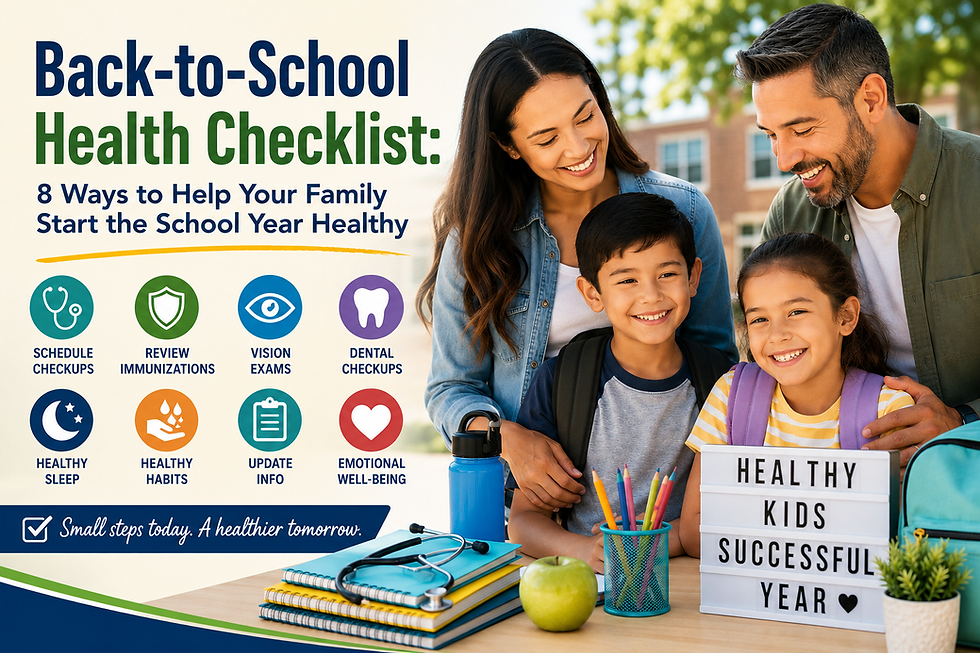
As families across California prepare for a new school year, attention often turns to backpacks, school supplies, schedules, and first-day outfits. But August is also a good time to make sure your family is physically and emotionally prepared for the months ahead.
A thoughtful back-to-school health checklist can help parents and caregivers organize routine appointments, update important records, and reestablish healthy habits before the school calendar becomes busy. August is also National Immunization Awareness Month, an annual observance that encourages people of all ages to review routine immunizations and discuss their health needs with a qualified healthcare provider.
Here are eight practical ways to help your family begin the school year feeling healthy, prepared, and confident.
1. Schedule Annual Health Checkups
Routine checkups give families an opportunity to discuss a child’s overall health, growth, development, medications, and any concerns that may affect the school day.
Depending on your child’s age and activities, this may include:
An annual physical
A sports physical
Medication reviews
Allergy or asthma updates
Developmental or behavioral questions
School health forms
Scheduling appointments before classes and fall activities begin may help California families avoid the last-minute rush that often comes with the start of the school year.
2. Review Immunization Records
National Immunization Awareness Month (August) highlights the importance of reviewing immunizations throughout every stage of life - not only during childhood. The observance encourages families to consult their healthcare providers about routine recommendations based on age, health history, pregnancy, school attendance, or travel.
Before school starts:
Locate your child’s immunization records.
Review any school or childcare documentation requirements.
Ask your healthcare provider whether anything needs to be updated.
Keep copies of important records in a secure, accessible place.
Discuss upcoming travel or health conditions that may affect recommendations.
California schools and childcare programs may request specific health documentation, so reviewing records early can help prevent enrollment delays or unexpected paperwork.
Health decisions are personal and may vary by individual. A physician, pediatrician, pharmacist, or other qualified healthcare professional can provide guidance based on your family’s circumstances.
3. Make Vision Health a Priority
Healthy vision can affect reading, classroom participation, sports, concentration, and confidence. Children may not always realize that they are having trouble seeing, especially if their vision has changed gradually.
Signs that may deserve attention include:
Squinting
Sitting unusually close to screens
Frequent headaches
Rubbing the eyes
Losing their place while reading
Tilting the head to see
Difficulty seeing the board
Avoiding reading or close-up work
A comprehensive eye exam can help identify vision concerns that may not be detected during a basic school screening. Whether children are learning in the classroom or participating in California’s many outdoor activities, clear and comfortable vision supports everyday success.
4. Schedule a Dental Checkup
Dental discomfort can make it difficult for a child to eat, sleep, focus, or participate fully at school. A routine dental visit can help identify potential concerns before they become more disruptive.
Parents can also reinforce simple daily habits:
Brush twice a day.
Floss regularly.
Replace worn toothbrushes.
Pack water instead of sugary drinks when possible.
Encourage children to speak up about tooth pain or sensitivity.
Adding dental care to your back-to-school health checklist can help support both comfort and confidence throughout the year.
5. Reset Sleep Schedules
Summer often brings later bedtimes and less predictable mornings. Returning to an early school schedule overnight can be difficult for children and parents alike.
Consider gradually moving bedtime and wake-up time earlier before school begins. A consistent evening routine may include:
Turning off screens before bedtime
Preparing clothes and backpacks in advance
Keeping the bedroom calm and comfortable
Reading or choosing another quiet activity
Following similar sleep and wake times each day
Adequate rest supports attention, mood, memory, and physical health. Establishing the routine early may make the first weeks of school feel more manageable.
6. Practice Everyday Healthy Habits
Children spend much of the school day near classmates, teachers, shared supplies, and frequently touched surfaces. Reviewing basic health habits can help children feel more responsible and prepared.
Remind them to:
Wash their hands thoroughly.
Avoid touching their eyes, nose, and mouth.
Cover coughs and sneezes.
Avoid sharing drinks or eating utensils.
Tell an adult when they feel unwell.
Drink water throughout the day.
Eat regular, balanced meals when possible.
Families can also review the school’s illness policies and make a plan for days when a child needs to remain home.
7. Update School Health and Emergency Information
Emergency contacts and medical information can change from year to year. Reviewing school forms before returning them helps ensure that staff members have accurate information if an issue arises.
Check the following:
Parent and caregiver phone numbers
Emergency contacts
Allergies
Current medications
Medical conditions
Authorized pickup contacts
Preferred healthcare provider
Insurance information
Medication authorization forms
Children with asthma, severe allergies, diabetes, or other ongoing needs may require additional documentation or an individualized school health plan. Speak with the school and your child’s healthcare provider about what should be in place.
8. Support Emotional Well-Being
A healthy school year involves more than physical wellness. New teachers, changing friendships, academic expectations, and unfamiliar routines can create excitement and anxiety at the same time.
Give children opportunities to talk about how they feel. Questions such as these may help start the conversation:
What are you looking forward to?
Is anything making you nervous?
What would help you feel more prepared?
Who can you talk to at school when you need help?
Visiting the campus, reviewing the daily schedule, organizing supplies, and discussing transportation plans may help reduce uncertainty.
Watch for ongoing changes in sleep, appetite, mood, behavior, or interest in school. Parents and caregivers who are concerned about a child’s emotional health can reach out to a pediatrician, school counselor, or qualified mental health professional.
A Healthier Start to the School Year
Preparing for school is about more than purchasing notebooks and filling a backpack. It is also an opportunity to review preventive care, organize important records, and create routines that support learning and overall well-being.
For California families, completing a back-to-school health checklist before the first day can make the transition feel smoother. Scheduling checkups, reviewing immunization records with a healthcare provider, prioritizing vision and dental care, and rebuilding healthy routines can help children start the year feeling supported and ready to learn.
Small preparations made now may lead to a healthier, more confident school year for the entire family.


Comments